The Chromozone / Courses / Cambridge Primary Science / Stage 6 / Forces
Year 6 Science · Homework
Homework: label detective
A hunt in your kitchen: read the mass on four packets, work out their weight in newtons and draw a bar chart. It takes about 15 minutes and is worth 8 marks. Type your answers in the boxes on screen, or print the sheet and write on it.
Teach this first
This homework follows Lesson 1 of the Forces unit, Mass and weight.
Part A: label detective (5 marks) 10 min
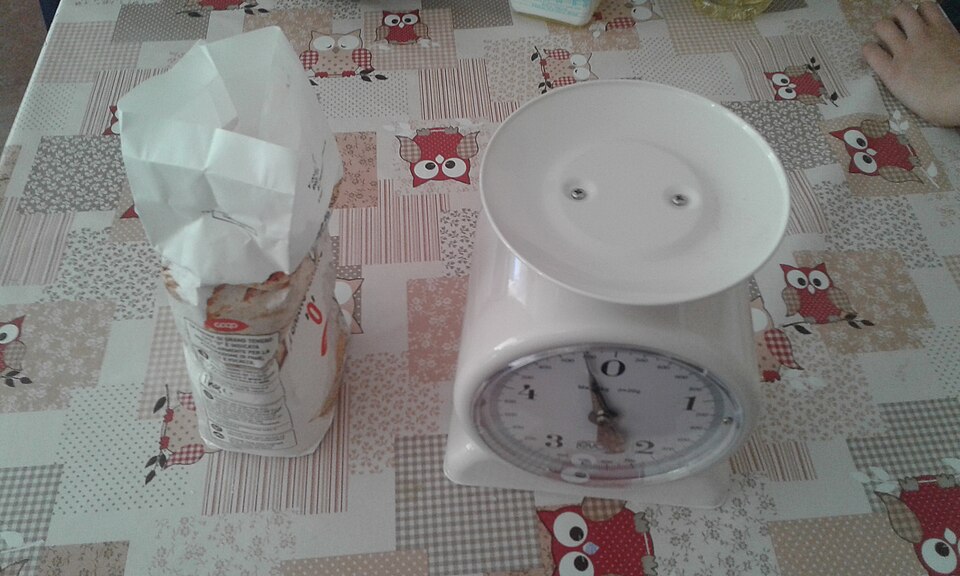
Find four packets or tins in your kitchen (ask an adult first): rice, flour, pasta, beans, anything. Look for the mass on each label, in grams (g) or kilograms (kg). Fill in the table. Remember: 1 kg = 1000 g, and on Earth every 1 kg weighs about 10 N. Then draw a bar chart of the weights on squared paper.

| Packet | Mass on the label | Mass in kg | Weight on Earth (N) |
|---|---|---|---|
A1. Type two of your packets, with the mass from the label. (2)
A2. Work out the weight on Earth of one of your packets. Show how you did it. (2)
A3. Which of your packets has the biggest weight? How does your bar chart show it? (1)
Check your answers to part A
A1 (2)
- First packet with its mass and unit (g or kg) (1)
- Second packet with its mass and unit (1)
- Such as: rice, 1 kg; pasta, 500 g.
A2 (2)
- The mass in kilograms (such as 500 g = 0.5 kg) (1)
- Times 10, with the unit N (such as 0.5 × 10 = 5 N) (1)
- If you hand in online, you do not need to send the bar chart: keep it in your book.
A3 (1)
- The packet with the biggest mass, because it has the tallest bar (1)
Part B: the label puzzle (3 marks) 5 min
A packet of pasta says: “Net weight 500 g”.
B1. Is 500 g really a weight? Explain. (2)
B2. What is the real weight of the pasta on Earth, in newtons? (1)
Check your answers to part B
B1 (2)
- No, it is a mass (1)
- Grams (and kilograms) measure mass; weight is a force, measured in newtons (1)
- Shops use “weight” the everyday way.
B2 (1)
- About 5 N (0.5 kg × 10) (1)