The Chromozone / IAL Biology / Unit 1 / Topic 1
Topic 1A revision: water, carbohydrates and lipids
Revision for the Topic 1A test: one screen for each spec point, 1.1 to 1.5. On each screen, answer the from-memory question first, then read the key words and key facts, do the quick check and read the common mistakes. Mark the quick checks yourself. The self-check at the end (12 marks) can be handed in online: its mark scheme opens after you hand in. It takes about 40 minutes.
Teach these first
This page builds on these lessons. Teach them before students start here:
1.1 Water: from memory first (2 marks) 1 min
Before you read: which atom in a water molecule is slightly negative, and which is slightly positive? (2)
Reveal the answer
- Oxygen: slightly negative (δ−) (1)
- Hydrogen: slightly positive (δ+) (1)
- DO NOT ACCEPT the charges the wrong way round
Key words: water (1.1)
- Polar molecule (dipole)
- A molecule with an uneven spread of charge: one part slightly negative (δ−), another slightly positive (δ+).
- Hydrogen bond
- A weak attraction between a δ+ hydrogen atom of one molecule and a δ− atom, such as oxygen, of another.
- Solvent
- A liquid that other substances dissolve in.
- Cohesion and adhesion
- Water attracted to water (cohesion) and to other substances, such as xylem walls (adhesion).
1.1 Water as a solvent in transport: key facts
| Idea | Key fact |
|---|---|
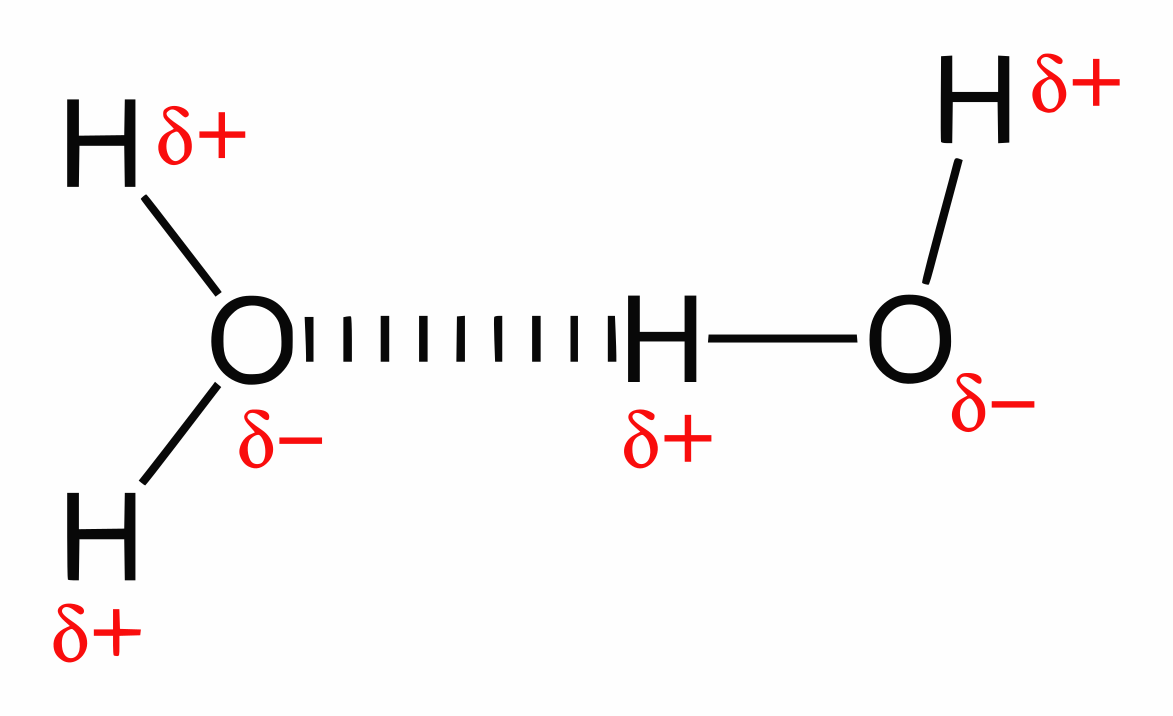
| Bonding | One O and two H atoms, joined by covalent bonds. O pulls the shared electrons more, so O is δ− and each H is δ+. |
| Hydrogen bonds | Between molecules: δ+ H of one water to δ− O of another. Weak, but there are very many. |
| Ions dissolve | δ− O faces Na+; δ+ H faces Cl−. The ions separate and are surrounded by water. |
| Polar molecules dissolve | Glucose: its −OH groups form hydrogen bonds with water. |
| Transport in solution | Plasma: glucose, amino acids, ions, urea. Xylem: mineral ions. Phloem: sucrose. |

Quick check 1.1 (3 marks) 2 min
- Name the type of bond between two water molecules. (1)
- Explain why sodium chloride dissolves in water. (2)
Reveal the answers
1. (1)
- Hydrogen bond (1)
- DO NOT ACCEPT covalent bond
2. (2)
- δ− O is attracted to Na+; δ+ H to Cl− (1)
- The ions are pulled apart and surrounded by water (1)
- ACCEPT “the ions separate and dissolve” for the second point
Common misconceptions and exam errors (1.1)
- "Hydrogen bonds hold the atoms of a water molecule together." Covalent bonds join the atoms; hydrogen bonds form between molecules.
- Full charges. Write δ− and δ+ ("slightly negative", "slightly positive"). A water molecule has no overall charge.
1.2 Carbohydrates: from memory first (2 marks) 1 min
Name the storage polysaccharide of plants and the storage polysaccharide of animals. (2)
Reveal the answer
- Plants: starch (amylose and amylopectin) (1)
- Animals: glycogen (1)
- DO NOT ACCEPT cellulose or glucose
Key words: carbohydrates (1.2)
- Monosaccharide
- A single sugar unit, such as glucose, fructose or galactose.
- Disaccharide
- Two monosaccharides joined by a glycosidic bond, such as maltose, sucrose or lactose.
- Polysaccharide
- Many monosaccharides joined in a chain, such as amylose, amylopectin and glycogen.
- Insoluble
- Does not dissolve, so it does not change the water potential of the cell.
1.2 Structure and role in energy: key facts
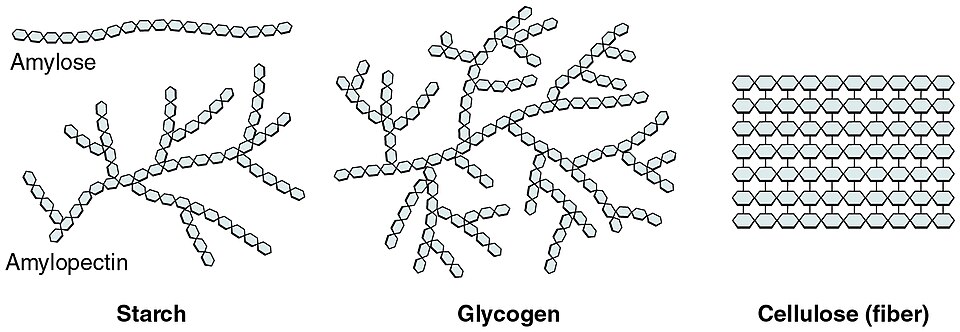
Glucose and disaccharides provide energy: they are soluble, so they are transported easily, and glucose is broken down in respiration to make ATP. Starch and glycogen store energy: they are insoluble and compact.
| Feature | Amylose | Amylopectin | Glycogen |
|---|---|---|---|
| Found in | Plants (starch) | Plants (starch) | Animals: liver and muscle |
| Shape | Unbranched; coils into a helix | Branched | Highly branched |
| Glycosidic bonds | α-1,4 | α-1,4 and α-1,6 | α-1,4 and α-1,6 |
| Why it suits storage | Compact helix | Compact; many ends | Very compact; many ends, so glucose is released fastest |

You do not need β-glucose or cellulose in this topic.
Quick check 1.2 (3 marks) 2 min
- Give two features of glycogen that make it a good energy store. (2)
- Spot the mistake: "Starch is a good store because it is soluble." Correct it. (1)
Reveal the answers
1. (2): any two
- Insoluble: no effect on water potential (1)
- Compact: lots of glucose in a small space (1)
- Highly branched: many ends, so glucose is released quickly (1)
- Max 2
2. (1)
- Starch is insoluble, so it does not affect water potential (1)
- DO NOT ACCEPT “starch is not soluble enough”
Common misconceptions and exam errors (1.2)
- "Insoluble, so it is a good store." Finish the link: insoluble, so it does not lower the water potential, and water does not enter by osmosis.
- "Branched, so less compact." The opposite: branches pack glycogen into a small space, and give many ends for quick release.
1.3 Core practical 1: from memory first (2 marks) 1 min
Name the reagent used to test for reducing sugars, and the reagent used to test for starch. (2)
Reveal the answer
- Reducing sugars: Benedict's reagent (1)
- Starch: iodine solution (1)
- ACCEPT iodine in potassium iodide solution
Key words: core practical 1 (1.3)
- Reducing sugar
- A sugar that can reduce another chemical, such as the copper(II) ions in Benedict's reagent. Sucrose is not one.
- Semi-quantitative
- Estimates a range of concentrations by comparing with standards, not an exact value.
- Colour standards
- Solutions of known concentration, tested in the same way as the unknown.
- Dilution
- Adding distilled water to a solution to lower its concentration.
1.3 Estimating reducing sugar and starch: key facts
| Reducing sugars | Starch | |
|---|---|---|
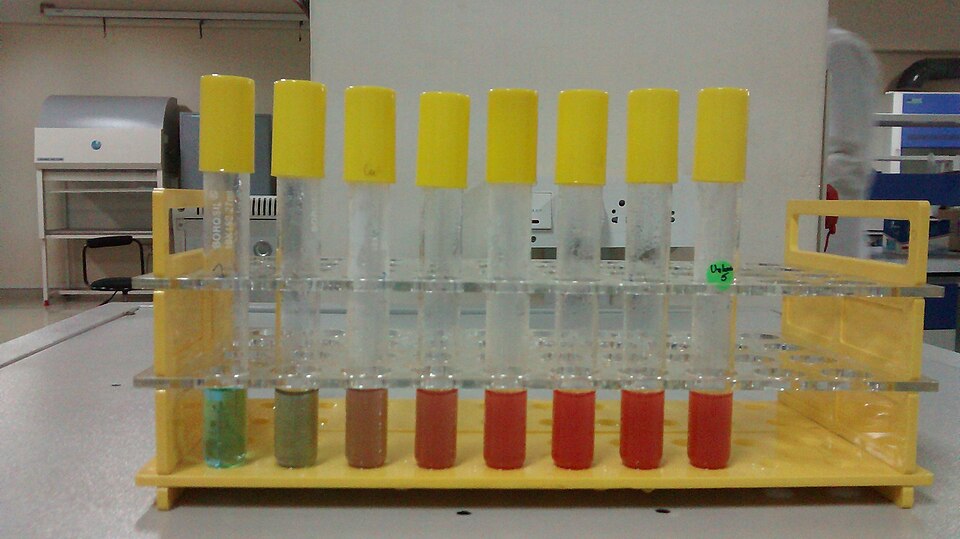
| Reagent | Benedict's reagent (blue) | Iodine solution (orange-brown) |
| Heat? | Yes: water bath at 80 to 90 °C, 5 minutes | No |
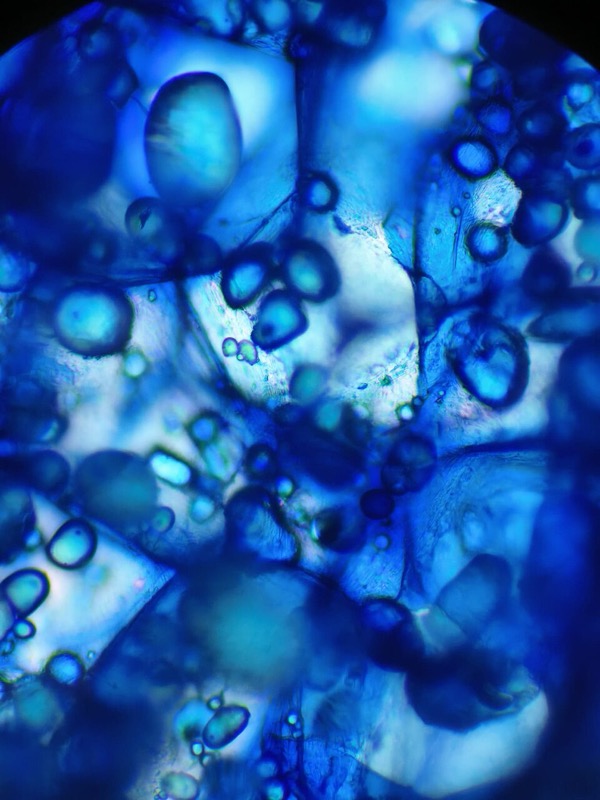
| Positive result | Green, yellow, orange, brick red: more sugar further along | Blue-black: darker means more starch |
| Standards | Known glucose concentrations, such as 0 to 2.0% | Known starch concentrations |
| Keep the same | Volumes of sample and reagent; temperature; time | Volumes (number of drops) |


Quick check 1.3 (3 marks) 2 min
- Calculate the volumes of 2.0% glucose stock and distilled water needed to make 10 cm3 of 0.8% glucose. (2)
- Spot the mistake: "The juice matched the 0.5% standard, so it contains exactly 0.5% sugar." Correct it. (1)
Reveal the answers
1. (2)
- (0.8 ÷ 2.0) × 10 = 4.0 cm3 of stock (1)
- 6.0 cm3 of distilled water (1)
- ALLOW ecf for the water volume from a wrong stock volume
- NB both volumes need their units
2. (1)
- It is an estimate, a range near 0.5%, not an exact value (1)
- DO NOT ACCEPT “the test is wrong”
Common misconceptions and exam errors (1.3)
- Forgetting to heat. Benedict's needs a water bath at 80 to 90 °C. The iodine test needs no heat.
- Forgetting the dilution factor. If the sample was diluted 1 in 10, multiply the estimate by 10.
1.4 Glycosidic bonds: from memory first (2 marks) 1 min
Name the reaction that joins two monosaccharides, and the reaction that splits them. (2)
Reveal the answer
- Joining: condensation (water released) (1)
- Splitting: hydrolysis (water used) (1)
- DO NOT ACCEPT the two words the wrong way round
Key words: glycosidic bonds (1.4)
- Condensation reaction
- Joins two molecules and removes a molecule of water.
- Hydrolysis
- Breaks a bond by adding a molecule of water.
- Glycosidic bond
- The covalent bond that joins two monosaccharides.
- α-1,4 and α-1,6 bonds
- α-1,4 bonds make straight chains; α-1,6 bonds make branches.
1.4 Making and breaking glycosidic bonds: key facts
| Carbohydrate | Made from | Bond |
|---|---|---|
| Maltose | glucose + glucose | α-1,4 |
| Sucrose | glucose + fructose | α-1,2 |
| Lactose | galactose + glucose | 1,4 |
| Amylose | many α-glucose | α-1,4 |
| Amylopectin, glycogen | many α-glucose | α-1,4 and α-1,6 |
maltose + water → glucose + glucose (hydrolysis)
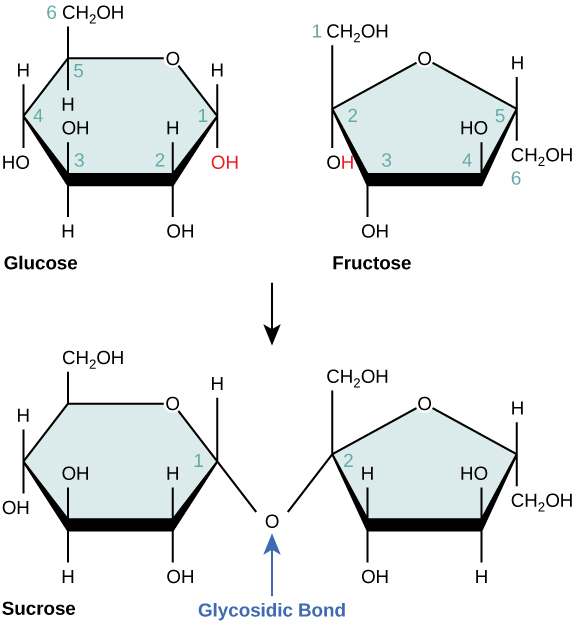

Quick check 1.4 (3 marks) 2 min
- How many water molecules are released when 12 glucose molecules join into one unbranched chain? (1)
- Spot the mistake: "Hydrolysis joins two glucose molecules and releases water." Correct it. (2)
Reveal the answers
1. (1)
- 11: one for each glycosidic bond (1)
- DO NOT ACCEPT 12
2. (2)
- Hydrolysis breaks a glycosidic bond and uses water (1)
- Condensation joins them and releases water (1)
- ACCEPT “it is condensation that joins them” for the second point
Common misconceptions and exam errors (1.4)
- Mixing up the reactions. Condensation joins and releases water; hydrolysis splits and uses water.
- "Sucrose is glucose + glucose." Only maltose is. Sucrose is glucose + fructose; lactose is glucose + galactose.
1.5 Triglycerides: from memory first (2 marks) 1 min
How many fatty acids join to one glycerol, and how many water molecules are released? (2)
Reveal the answer
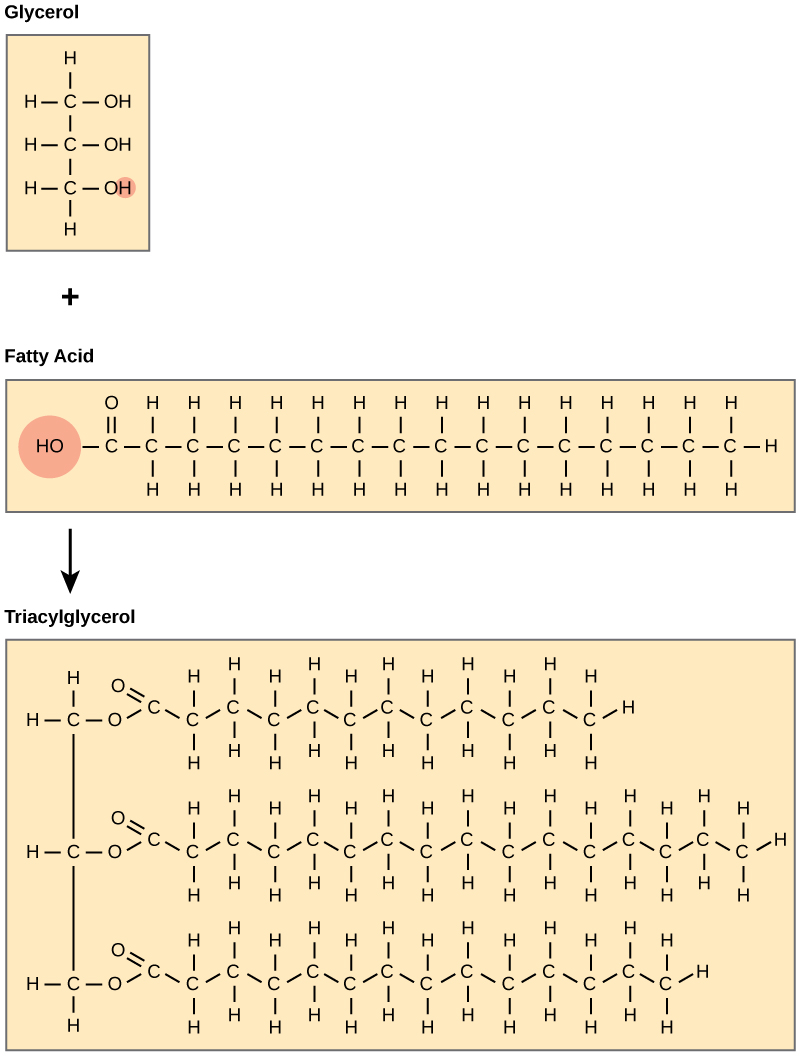
- Three fatty acids (1)
- Three water molecules (1)
- ACCEPT 3 for three
Key words: lipids (1.5)
- Triglyceride
- A lipid made of one glycerol joined to three fatty acids by ester bonds.
- Ester bond
- The bond (−COO−) formed by condensation between −OH of glycerol and −COOH of a fatty acid.
- Saturated fatty acid
- No C=C double bonds in its hydrocarbon chain.
- Unsaturated fatty acid
- One or more C=C double bonds; each one puts a kink in the chain.
1.5 Triglycerides and saturation: key facts
| Saturated | Unsaturated | |
|---|---|---|
| C=C double bonds | None | One or more |
| Chains | Straight; pack closely | Kinked; cannot pack closely |
| Melting point | Higher: usually solid (fats) | Lower: usually liquid (oils) |

Quick check 1.5 (3 marks) 2 min
- Name the two groups that react to form an ester bond. (1)
- Spot the gap: "Unsaturated fats are liquid because they have double bonds." Complete the explanation. (2)
Reveal the answers
1. (1)
- −OH of glycerol and −COOH of a fatty acid (1)
- ACCEPT hydroxyl and carboxyl
- NB both groups are needed
2. (2)
- Double bonds put kinks in the chains (1)
- So molecules cannot pack closely: lower melting point (1)
- IGNORE “double bonds make it weaker”
Common misconceptions and exam errors (1.5)
- Glycosidic or ester? Glycosidic bonds join sugars; ester bonds join fatty acids to glycerol.
- Double bonds in the wrong place. The C=C bonds are in the fatty acid chains, not in the glycerol.
Self-check: Topic 1A (12 marks) 12 min
Exam-style questions, one on each spec point. Type your answers in the boxes and hand them in at the end.
- Describe the dipole nature of water. (1.1) (2)
- Compare and contrast the structures of amylose and amylopectin. (1.2) (3)
- A fruit juice was diluted 1 in 5 before a Benedict's test. Its colour was between the 0.5% and 1.0% glucose standards. Estimate the reducing sugar concentration of the undiluted juice. (1.3) (2)
- Describe how a molecule of sucrose is formed. (1.4) (3)
- Explain why a triglyceride is not a polymer. (1.5) (2)
Reveal the self-check mark scheme
1. Water (2)
- O is more electronegative: it pulls the shared electrons (1)
- So O is δ− and each H is δ+ (1)
- ACCEPT “oxygen attracts the electrons more strongly”
2. Amylose and amylopectin (3): at least one similarity
- Similarity: both are chains of α-glucose with α-1,4 bonds (1)
- Difference: amylopectin is branched; amylose is not (1)
- Difference: amylopectin has α-1,6 bonds at the branches (1)
- Difference: amylose coils into a helix (1)
- Max 3
- DO NOT PIECE TOGETHER a difference from separate statements about each molecule
3. Dilution factor (2)
- Multiply by 5 (1)
- Between 2.5% and 5.0% (1)
- ALLOW ecf from a wrong multiplier
- DO NOT ACCEPT a single value
4. Sucrose (3)
- From glucose and fructose (1)
- A condensation reaction: water is removed (1)
- A glycosidic bond forms: carbon 1 of glucose to carbon 2 of fructose (1)
- ACCEPT a glycosidic bond between carbon 1 and carbon 2 (α-1,2)
5. Not a polymer (2)
- A polymer is a chain of many repeating monomers (1)
- A triglyceride is one glycerol and three fatty acids (different molecules) (1)
- DO NOT ACCEPT “it is too small”
RAG self-assessment by spec point
Rate each spec point in your notebook. Go back to the lesson for anything red or amber before the Topic 1A test.
- Red: I could not answer the quick check or self-check on it without my notes.
- Amber: I knew the facts but lost marks on the explanation or the spot-the-mistake question.
- Green: I got full marks and could explain each answer.
Lessons: 1.1 water · 1.2 and 1.4 sugars · 1.2 starch and glycogen · 1.3 core practical 1 · 1.5 triglycerides