The Chromozone / IAL Biology / Unit 1 / Topic 1
Revision 1C: health risks and treating cardiovascular disease
Revision for Topic 1C, to work through on your own before the end-of-section test. There is one screen for each spec point: key words, the key facts and a common mistake, then a one-minute "Spot the mistake". At the end is a self-check of 23 marks. Type your self-check answers in the boxes and hand them in at the end; the model answers open after you hand in, so you can mark yourself. It takes about 40 minutes. Teachers: set this after the lesson on 1.19 and 1.20.
Teach these first
This page builds on these lessons. Teach them before students start here:
Key words: 1.15 health data
- Correlation
- A relationship between two variables: when one changes, the other tends to change too.
- Causation
- A change in one variable directly causes a change in the other.
- Confounding variable
- A third variable that affects both variables being studied, so it can produce a correlation that is not causal.
- Relative risk
- The risk in one group divided by the risk in a baseline group. The baseline group has a relative risk of 1.0.
1.15 Health data: correlation, causation and relative risk
| Reason | Example |
|---|---|
| Chance | In a small sample, a link can appear by luck. |
| A confounding variable | Older people have both higher blood pressure and more heart disease. |
| Cause the other way round | An illness may change behaviour, rather than the behaviour causing the illness. |
A cause is likely when the correlation is found again and again in different populations, there is a biological mechanism, and controlled trials show that lowering the factor lowers the disease. Conflicting evidence: studies can disagree because they used different samples, sizes or methods; give more weight to large, well-designed studies.
Common mistake: writing that a correlation shows that one variable causes the other. Always ask what else could explain the link.
Spot the mistake (2)
Rewrite this sentence so that it is correct, and say why the original is wrong. (2)
"The relative risk for group X is 0.7, so people in group X are 70% less likely to develop CHD."
Check your answer
- The relative risk in group X is 70% of the baseline risk (1)
- So it is 30% lower than the baseline, not 70% lower (1)
- ACCEPT 100 − 70 = 30%
- DO NOT ACCEPT a corrected sentence with no figure
Key words: 1.16 study design
- Valid
- A study is valid if it measures what it is meant to measure, with the important confounding variables controlled.
- Reliable
- Results are reliable if they are repeatable: the same method, used again, gives similar results.
- Representative sample
- A sample that is like the whole population the conclusions are about.
- Bias
- A fault in how the sample is chosen or the data are collected, which pushes the results one way.
1.16 Evaluating the design of health risk studies
| Feature | Why it matters |
|---|---|
| A large sample | Anomalies have less effect and real patterns are easier to see (reliability). |
| A representative sample | Both sexes, a range of ages and backgrounds, so the conclusions apply to the whole population (validity). |
| Confounding variables controlled | Groups are matched, or variables such as age, smoking, diet and exercise are measured and allowed for (validity). |
| Repeated by other scientists | Other samples giving similar results show the findings are reliable. |
Volunteers who choose to take part are often not typical of the population, so a self-selected sample is likely to be biased.
Common mistake: thinking a large sample fixes everything. A large sample makes results more reliable, but it cannot correct a biased sample.
Spot the mistake (2)
Rewrite this sentence so that it is correct, and say why the original is wrong. (2)
"In a study comparing coffee drinkers with people who drink no coffee, there was no need to record who smoked, because smoking has nothing to do with coffee."
Check your answer
- Smoking is a confounding variable: it may be more common in one group (1)
- Smoking raises CHD risk, so it must be recorded and allowed for (1)
- ACCEPT a third / hidden variable
Key words: 1.17 risk
- Actual risk
- The risk calculated from research data on large numbers of people.
- Perceived risk
- How risky a person believes something is: their own judgement, which is often different from the actual risk.
1.17 Why perceived risk differs from actual risk
| Reason | What happens |
|---|---|
| Personal experience | People trust one example they know ("my grandad smoked and lived to 90") more than data on whole populations. |
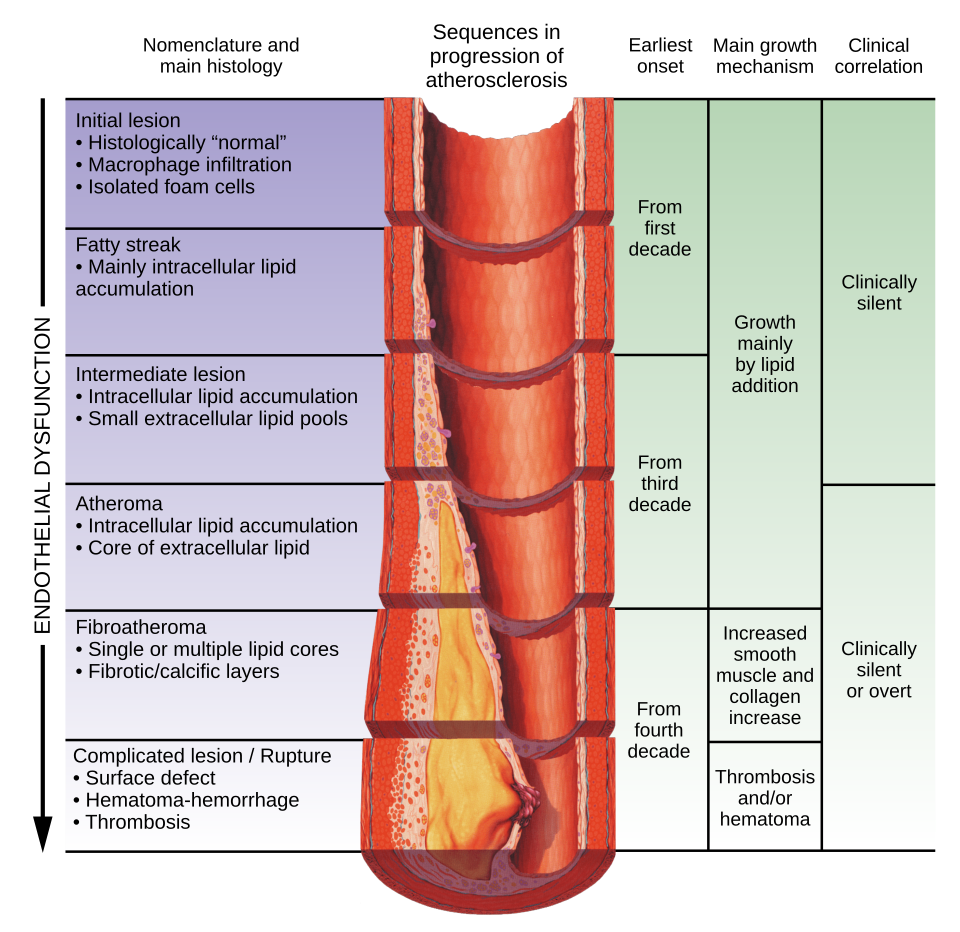
| Immediate gratification | Pleasure now feels more important than harm later: fatty food tastes good today, and atheroma builds up silently. |
| Familiarity and control | Familiar habits people choose, such as diet, are underestimated; rare, dramatic hazards, such as plane crashes, are overestimated. |
| Social acceptance | A habit that is normal among family and friends is seen as less dangerous. |

Common mistake: writing that people always overestimate risks. They overestimate rare, dramatic hazards and underestimate familiar ones, such as their diet.
Spot the mistake (2)
Rewrite this sentence so that it is correct, and say why the original is wrong. (2)
"Perceived risk is the risk calculated from data collected on large numbers of people."
Check your answer
- That describes actual risk (1)
- Perceived risk is how risky a person believes something is (1)
- ACCEPT a person's own judgement of the risk
Key words: 1.18 cholesterol
- Lipoprotein
- A particle of lipid (such as cholesterol) combined with protein, which carries lipids in the blood.
- LDL (low-density lipoprotein)
- Carries cholesterol from the liver to body cells. High levels raise the risk of CVD.
- HDL (high-density lipoprotein)
- Carries excess cholesterol from the tissues back to the liver. High levels lower the risk of CVD.
1.18 Cholesterol, HDLs and LDLs
| LDLs | HDLs | |
|---|---|---|
| Make-up | More lipid, less protein (low density) | More protein, less lipid (high density) |
| Job | Carry cholesterol from the liver to body cells | Carry excess cholesterol back to the liver |
| Effect of high levels | More cholesterol deposited in artery walls: atheroma forms | Less cholesterol in the blood: protects against CVD |
| Diet | Raised by saturated fats | Raised by unsaturated fats and exercise |
The HDL:LDL ratio predicts CVD better than total cholesterol: a high ratio means a lower risk. Evidence that LDL cholesterol causes CVD: a biological mechanism (LDL enters damaged artery walls and leads to atheroma); cohort studies in many populations, in which high LDL comes before CVD; and controlled trials in which lowering LDL lowers the rate of CVD.
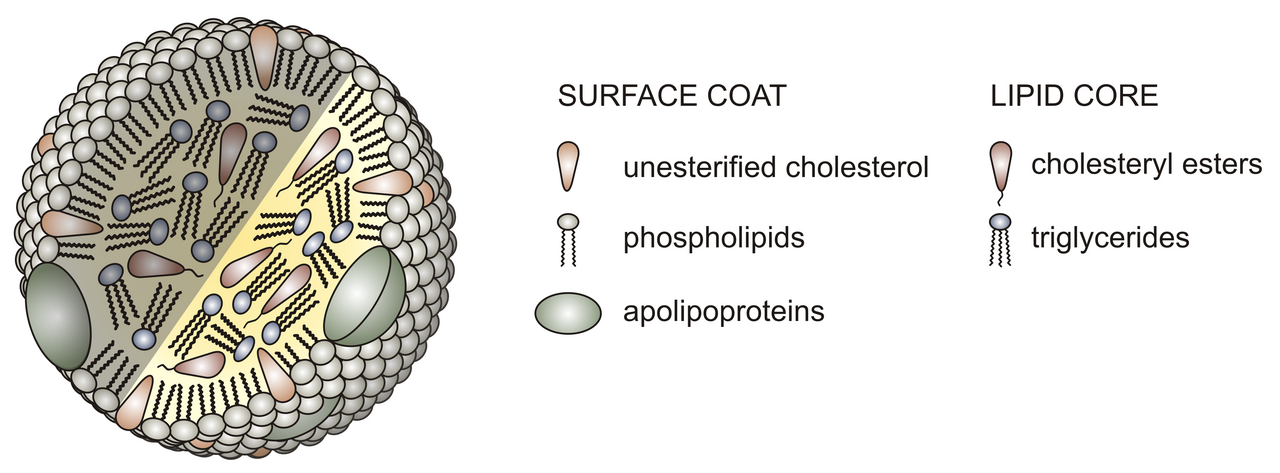

Common mistake: calling HDL and LDL types of cholesterol. They are lipoproteins that carry cholesterol.
Spot the mistake (2)
Rewrite this sentence so that it is correct, and say why the original is wrong. (2)
"Cohort studies such as the Framingham Heart Study show that high LDL causes CVD, so no other evidence is needed."
Check your answer
- Cohort studies show a correlation only (1)
- A biological mechanism and controlled trials are also needed (1)
- ACCEPT a confounding variable could explain the link
- Max 2
Key words: 1.19 reducing the risk
- Body mass index (BMI)
- Body mass in kg divided by the square of height in m. Units: kg m−2.
- Waist-to-hip ratio (WHR)
- Waist circumference divided by hip circumference. It has no units.
- Visceral fat
- Fat stored around the internal organs in the abdomen. It is strongly linked with CVD.
1.19 Using science to reduce the risk of CHD
| What to know | |
|---|---|
| BMI bands (kg m−2) | Below 18.5 underweight; 18.5 to 24.9 normal; 25.0 to 29.9 overweight; 30.0 and above obese |
| WHR | Above 0.90 for men or 0.85 for women counts as obese; it shows fat around the abdomen |
| Diet | Less saturated fat lowers LDL; less salt lowers blood pressure |
| Exercise | Raises HDL, lowers blood pressure and helps to control body mass |
| Stopping smoking | No more chemicals damaging the endothelium, no nicotine raising blood pressure, and no carbon monoxide binding to haemoglobin |
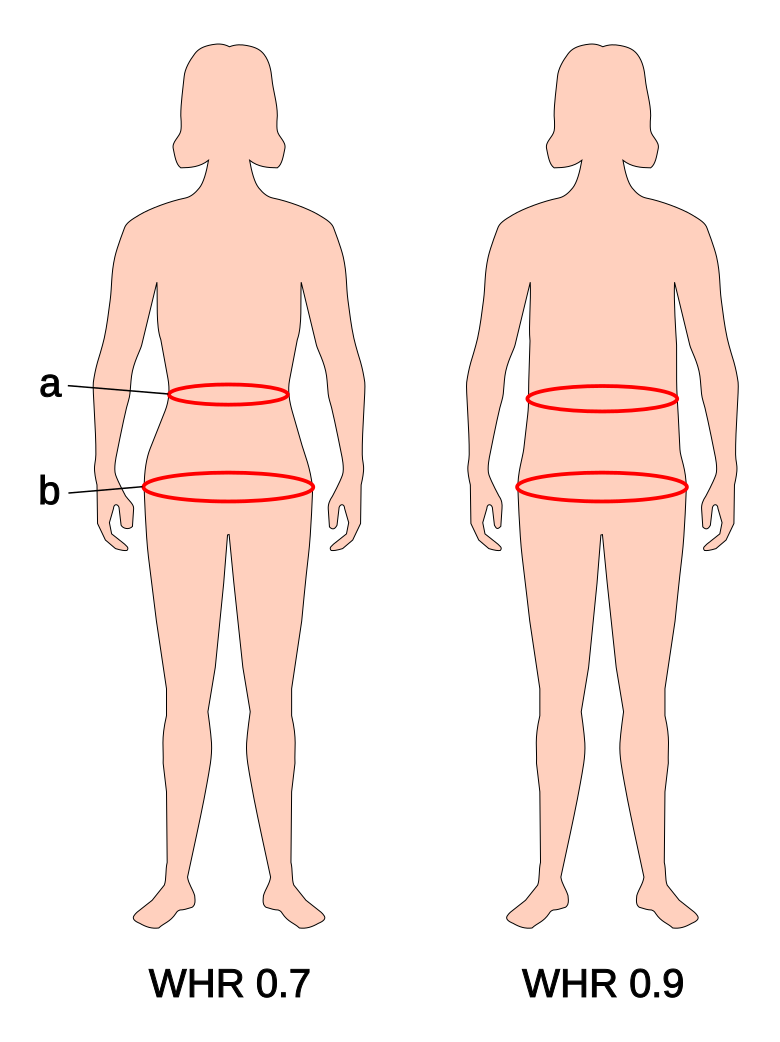

Common mistake: treating BMI as a measure of fat. A muscular person can have a high BMI; the WHR shows where the fat is stored.
Spot the mistake (2)
Rewrite this sentence so that it is correct, and say why the original is wrong. (2)
"BMI is calculated by dividing a person's height in metres by their mass in kilograms squared."
Check your answer
- Divide the mass (kg) by the height (m), not the other way round (1)
- It is the height that is squared: BMI = mass ÷ height2 (1)
- NB both parts of the formula must be right for both marks
Key words: 1.20 treatments
- Antihypertensive
- A drug that lowers high blood pressure, for example a diuretic, a beta-blocker or an ACE inhibitor.
- Statin
- A drug that lowers blood cholesterol by blocking an enzyme the liver uses to make cholesterol.
- Anticoagulant
- A drug that slows the clotting process, so fewer clots form. Example: warfarin.
- Platelet inhibitor
- A drug that makes platelets less sticky, so they do not clump together. Examples: aspirin, clopidogrel.
1.20 Treatments for CVD: benefits and risks
| Treatment | How it works, benefit and risk |
|---|---|
| Antihypertensives | How: diuretics lower blood volume; beta-blockers slow the heart; ACE inhibitors keep arteries wide. Benefit: less damage to the endothelium; fewer heart attacks and strokes. Risk: blood pressure too low (hypotension), causing dizziness and fainting; side effects such as a dry cough. |
| Statins | How: block a liver enzyme that makes cholesterol, so LDL falls. Benefit: plaques grow more slowly; fewer heart attacks and strokes. Risk: muscle pain, digestive problems, liver damage; a slightly higher risk of type 2 diabetes. |
| Anticoagulants (warfarin) | How: less prothrombin is made, so less fibrin forms. Benefit: fewer clots block arteries. Risk: severe bleeding (haemorrhage); the dose needs regular blood tests. |
| Platelet inhibitors (aspirin, clopidogrel) | How: platelets become less sticky, so they do not clump. Benefit: fewer clots block arteries. Risk: bleeding; aspirin can cause stomach ulcers. |
Common mistake: writing that anticoagulants or platelet inhibitors dissolve clots or atheroma. They make new clots less likely to form.
Spot the mistake (2)
Rewrite this sentence so that it is correct, and say why the original is wrong. (2)
"Statins lower blood pressure by making the heart beat more slowly."
Check your answer
- Statins lower blood cholesterol (LDL) by blocking a liver enzyme (1)
- Beta-blockers are the drugs that slow the heart (1)
- DO NOT ACCEPT statins lower blood pressure
Self-check: 1.15 to 1.20 (23 marks)
Answer from memory first, then look back at the screens if you need to. Allow about a minute per mark. The spec point is in brackets after each question.
Question 1 is about the relative-risk graph in section 1.15.
1(a) Calculate by what percentage the risk of CHD is lower in the 30-minute group than in the baseline group. (1.15) (1)
1(b) A student says that walking for 60 minutes lowers the risk more than walking for 30 minutes. Explain whether the data support this. (1.15) (2)
1(c) Give one reason why these data do not show that walking causes the lower risk of CHD. (1.15) (1)
2. A researcher wants to find out whether eating nuts lowers the risk of CHD. She asks 120 people at her local gym to fill in a questionnaire about how many nuts they ate last year, and whether they have CHD. Give three criticisms of the design of this study. (1.16) (3)
3. In a survey, most people rated "dying in a terrorist attack" as a greater risk than "dying of heart disease caused by a high-fat diet". The actual risk of heart disease is far greater. Explain why people misjudge these two risks. (1.17) (2)
| Person | Total | HDL | LDL |
|---|---|---|---|
| A | 6.2 | 2.0 | 3.6 |
| B | 5.0 | 0.9 | 3.8 |
| C | 4.8 | 1.6 | 2.6 |
| D | 6.8 | 1.0 | 5.2 |
4(a) Person A has a higher total cholesterol than person B. Use the data to explain why person A may still have the lower risk of CVD. (1.18) (2)
4(b) Identify the person with the highest risk of CVD. Give two reasons from the data. (1.18) (2)
5(a) A man has a body mass of 95 kg and a height of 1.75 m. Calculate his BMI and give his BMI category. (1.19) (2)
5(b) His waist is 104 cm and his hips are 108 cm. Calculate his waist-to-hip ratio and say what it shows. (1.19) (2)
5(c) Suggest why his WHR may tell his doctor more about his risk of CHD than his BMI does. (1.19) (1)
6(a) A woman with high blood pressure and high LDL cholesterol has had a stroke caused by a blood clot. Her doctor prescribes an ACE inhibitor, a statin and aspirin. Explain how each drug lowers her risk of another stroke. (1.20) (3)
6(b) Give one risk of taking aspirin and one risk of taking the ACE inhibitor. (1.20) (2)
Model answers for the self-check
1(a) Percentage lower (1)
- 20% (1.00 − 0.80 = 0.20) (1)
- ACCEPT 20 with the % sign missing only if the working is shown
- DO NOT ACCEPT 80%
1(b) 60 minutes compared with 30 minutes (2)
- The error bars of the 30- and 60-minute groups overlap (1)
- So the difference may not be significant: the data do not support the claim (1)
- ACCEPT the ranges overlap / share values
1(c) Not a cause (1)
- A confounding variable, e.g. walkers may eat better or smoke less (1)
- ACCEPT cause the other way round (people who are already ill walk less)
- ACCEPT chance
2. The nut study (3): max 3
- Small sample of only 120 people (1)
- Not representative: gym members are more active than most people (1)
- Remembering a year of nut eating is unreliable (1)
- Confounding variables, such as exercise, smoking or diet, are not controlled (1)
- CHD and nut eating recorded at once: no follow-up over time (1)
- Max 3
- DO NOT ACCEPT 'the study is biased' without a reason
3. Terrorism and diet (2)
- Terrorist attacks are rare and dramatic, so their risk is overestimated (1)
- Diet is a familiar, chosen habit with slow harm, so its risk is underestimated (1)
- DO NOT ACCEPT the two the wrong way round
4(a) Person A and person B (2)
- A has much more HDL (2.0 compared with 0.9) and a higher HDL:LDL ratio (1)
- HDL carries cholesterol to the liver; LDL deposits it in artery walls (1)
- DO NOT ACCEPT HDL and LDL swapped
4(b) The highest risk (2)
- Person D, with one reason: the highest LDL (5.2) (1)
- Second reason: the lowest HDL:LDL ratio (about 0.19) or a high total (1)
- NB both marks need person D
5(a) BMI (2)
- BMI = 95 ÷ 1.752 = 31.0 kg m−2 (1)
- Obese (30.0 and above) (1)
- ACCEPT 31 / 31.02
- NB the BMI needs its unit
- ALLOW ecf for the category from the BMI calculated
5(b) WHR (2)
- WHR = 104 ÷ 108 = 0.96 (1)
- Above 0.90 for a man, so he carries too much fat around his abdomen (1)
- ACCEPT 0.963
- ALLOW ecf for the conclusion
5(c) WHR or BMI (1)
- WHR shows fat around the abdomen (visceral fat), more linked to CHD (1)
- ACCEPT BMI cannot tell muscle from fat
6(a) Three drugs (3)
- ACE inhibitor: arteries stay wider, so blood pressure falls and less endothelium is damaged (1)
- Statin: less LDL cholesterol, so atheromas grow more slowly (1)
- Aspirin: platelets less sticky, so fewer clots form (1)
- DO NOT ACCEPT 'thins the blood' for aspirin
6(b) Risks (2)
- Aspirin: bleeding (haemorrhage) or stomach ulcers (1)
- ACE inhibitor: hypotension (dizziness, fainting) or a dry cough (1)
- DO NOT ACCEPT a risk for the wrong drug
RAG self-assessment
Mark your self-check, then decide what to revise before the end-of-section test.
- Red: I scored less than half. I will go back to the lessons for the spec points I got wrong.
- Amber: I know the facts, but I lose marks reading graphs, error bars or study designs.
- Green: I scored 18 or more and can explain every answer in my own words.
Next: the end-of-section test
When you are confident with every spec point, your teacher will set the Topic 1C end-of-section test.