The Chromozone / IAL Biology / Unit 4 / Topic 5
Revision summary: ecology, energy flow and succession (5.9 to 5.15)
One screen per spec point, 5.9 to 5.15: the key words, the key facts as a table or a picture, and a 2-minute "spot the mistake" check (mark it yourself with the correction). Then a list of common exam errors and a self-check of 24 marks. Type your self-check answers in the boxes and hand them in at the bottom of the page; its mark scheme opens after you hand in. It takes about 50 minutes and you need a calculator. Use it after the succession lesson (5.15), before test 5B. Teachers: this is the page to set as homework.
Teach these first
This page builds on these lessons. Teach them before students start here:
- 5.11 Introduction to ecology: the key terms
- 5.9 GPP, NPP and plant respiration
- 5.10 Energy transfer between trophic levels
- 5.12 Abiotic factors: light, wind and temperature (lesson 1 of 2)
- 5.12 Abiotic factors: water, oxygen and soil (lesson 2 of 2)
- 5.12 Biotic factors
- 5.13 Niche and competition
- 5.14 Statistics: Spearman's rank correlation coefficient
- 5.14 Statistics: the chi-squared test
- 5.14 Statistics: Student's t-test
- 5.14 Core practical 11: studying a habitat with quadrats and a transect (lesson 1 of 2)
- 5.14 Core practical 11: sampling methods and analysing the results (lesson 2 of 2)
- 5.15 Succession: from bare rock to a climax community
5.9 key words
- Gross primary productivity (GPP)
- The rate at which plants store chemical energy in their biomass by photosynthesis, in a given area in a given time.
- Respiration (R)
- The energy plants release from their own organic molecules in respiration. Most of it is lost as heat.
- Net primary productivity (NPP)
- The rate at which plants store energy in their biomass after respiratory losses.
5.9 GPP, NPP and plant respiration
- GPP and NPP are rates, so the unit has energy, area and time: kJ m−2 yr−1.
- NPP is always smaller than GPP. Rearranged: R = GPP − NPP.
- Only the NPP is available to herbivores and decomposers.
Check 5.9: spot the mistake (2 marks) 2 min
A student wrote this. Find each mistake and correct it. (2)
"NPP is bigger than GPP because the energy from respiration is added on. NPP is measured in kJ m−2."
Reveal the correction
- NPP = GPP − R: respiration is taken away, so NPP is smaller (1)
- NPP is a rate: the unit needs time, e.g. kJ m−2 yr−1 (1)
- ACCEPT "per year" in the unit
5.10 key words
- Trophic level
- The feeding position of an organism in a food chain: producers are level 1, primary consumers level 2, and so on.
- Transfer efficiency
- The percentage of the energy (or biomass) in one trophic level that becomes energy (or biomass) in the next.
- Pyramid of energy
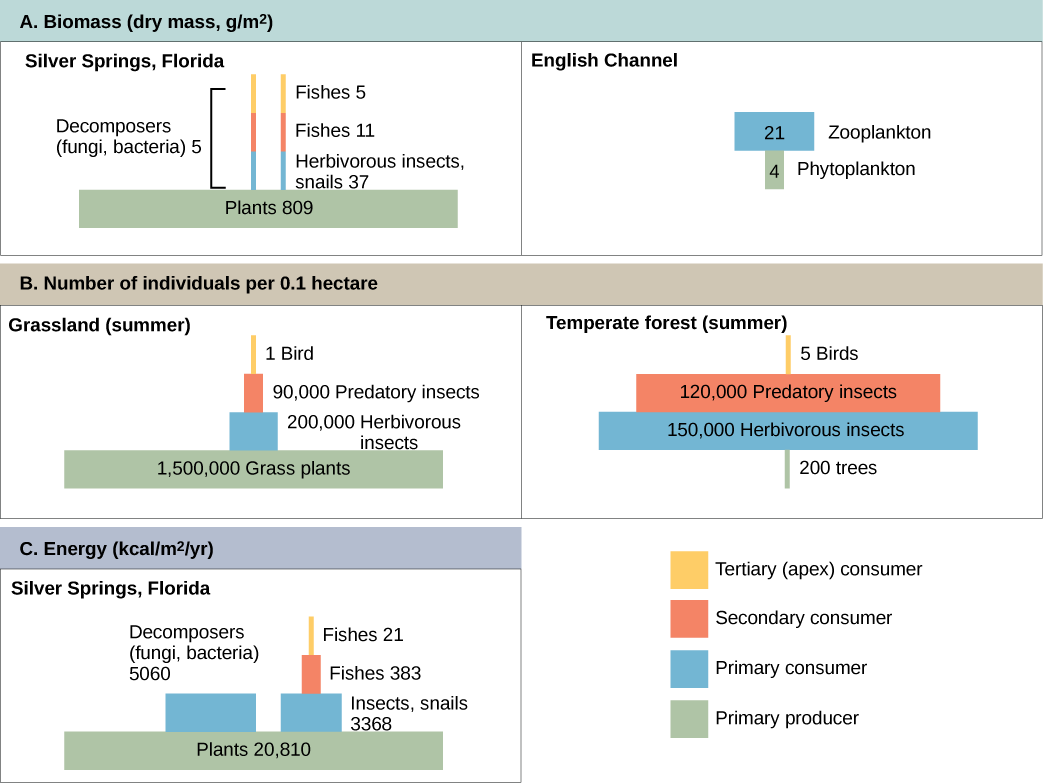
- Shows the rate at which energy flows into each trophic level. It is never inverted.
5.10 Energy transfer between trophic levels
| Loss | What happens |
|---|---|
| Not eaten | Roots, bark, bones: they pass to decomposers |
| Not digested | Lost in faeces, to decomposers |
| Respiration | Energy for movement and warmth, lost as heat |
| Passed on | Only the new biomass: on average about 10% (5 to 20%) |

Check 5.10: spot the mistake (2 marks) 2 min
A student wrote this. Find each mistake and correct it. (2)
"Energy is destroyed in respiration, so food chains are short. To find the efficiency, divide the lower level by the higher level and times by 100."
Reveal the correction
- Energy is not destroyed: it is transferred to the surroundings as heat (1)
- Efficiency = higher level ÷ lower level × 100 (1)
- DO NOT ACCEPT "energy is used up"
5.11 key words
- Population
- All the organisms of one species living in the same area at the same time.
- Community
- All the populations of different species living in the same area at the same time.
- Habitat
- The place where an organism normally lives.
- Ecosystem
- A community and the abiotic (non-living) environment it interacts with.
5.11 Population, community, habitat and ecosystem
| Term | Example |
|---|---|
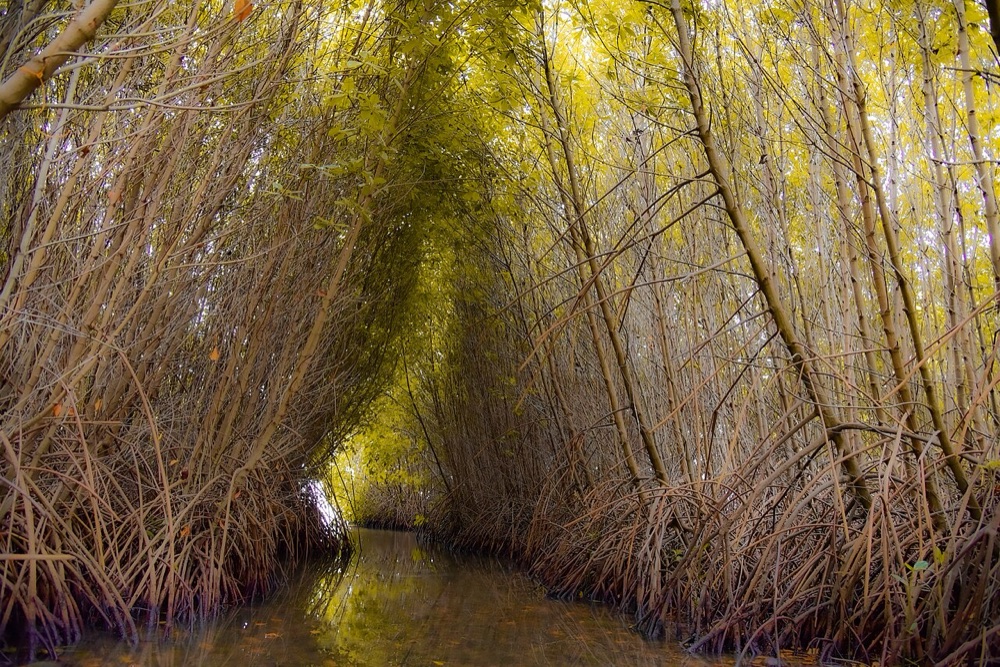
| Population | all the mudskippers of one species in the forest this year |
| Community | all the trees, crabs, fish, snails, birds and bacteria |
| Habitat | the mud between the trees, for a mudskipper |
| Ecosystem | the community plus the water, mud, salt, light and temperature |

Check 5.11: spot the mistake (2 marks) 2 min
A student wrote this. Find each mistake and correct it. (2)
"A community is all the organisms of one species in a habitat, together with the soil and the water."
Reveal the correction
- A community is all the populations of different species (one species is a population) (1)
- Soil and water are abiotic: community plus abiotic factors is the ecosystem (1)
5.12 key words
- Abiotic factor
- A non-living physical or chemical part of the environment, such as light, temperature or water.
- Distribution
- Where the organisms of a species are found in a habitat.
- Abundance
- How many organisms of a species there are in a habitat.
- Edaphic factors
- The abiotic factors of the soil: structure, water, air (oxygen), pH and mineral ions.
5.12 Abiotic factors
| Factor | The biology behind it |
|---|---|
| Light | photosynthesis; day length times breeding |
| Temperature | enzyme activity, so metabolism and growth |
| Water | stomata close when it is short, so less carbon dioxide and less photosynthesis |
| Wind and currents | transpiration, heat loss, dispersal of seeds and larvae |
| Oxygen | aerobic respiration in roots and animals, so ATP |
| Soil | drainage, air, mineral ions (nitrate for proteins) |

Check 5.12: spot the mistake (2 marks) 2 min
A student wrote this. Find each mistake and correct it. (2)
"In winter, low temperatures denature the enzymes in plants. In waterlogged soil, the roots drown."
Reveal the correction
- Low temperatures only slow enzymes (less kinetic energy); high temperatures denature them (1)
- Waterlogged soil has little oxygen, so less aerobic respiration and ATP in the roots (1)
- IGNORE "the roots drown" with no reference to oxygen
5.12 key words
- Biotic factor
- A living part of the environment, such as food supply, predators, competitors, parasites or disease.
- Predator and prey
- A predator kills and eats other animals; the animals it eats are its prey.
- Territory
- An area an animal (or a breeding pair) defends against others of its species, to keep its food and space.
- Parasite
- An organism that lives on or in a host and feeds from it, harming the host.
5.12 Biotic factors
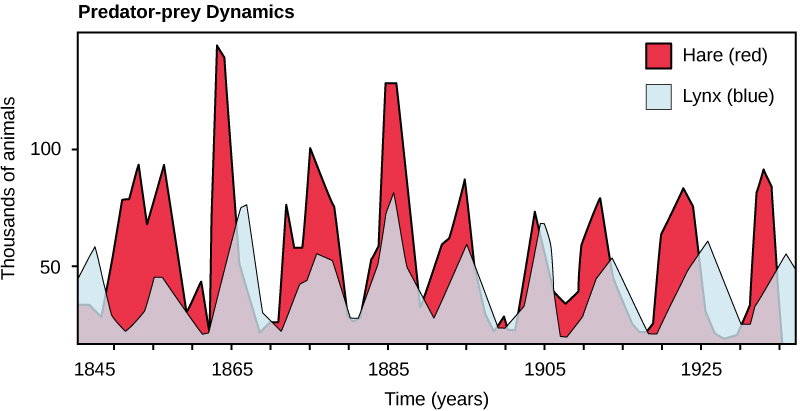

- Predation: more prey, then more predators; more predators, then fewer prey. Predator numbers peak later.
- Mates and territory: a small, spread-out population breeds less; a territory gives a pair enough food for its young.
- Parasites and disease: spread fastest where many individuals of one species live close together.
Check 5.12: spot the mistake (2 marks) 2 min
A student wrote this. Find each mistake and correct it. (2)
"Lynx and hare numbers peak at the same time. A shortage of food is an abiotic factor."
Reveal the correction
- Predator (lynx) numbers peak after the prey (hare) numbers: they need time to breed (1)
- Food is living, so a food shortage is a biotic factor (1)
5.13 key words
- Niche
- The role of a species in its habitat: what it eats, where it lives and feeds, and how it interacts with other organisms and abiotic factors.
- Competitive exclusion
- Two species cannot share exactly the same niche in the same habitat for long: the better adapted one outcompetes the other.
- Intraspecific competition
- Competition between members of the same species.
- Interspecific competition
- Competition between members of different species, whose niches overlap.
5.13 Niche and competition
| Cormorant | Shag | |
|---|---|---|
| Nests on | broad cliff ledges | narrower ledges |
| Feeds on | flatfish and prawns on the sea bed | free-swimming fish such as sand eels |
| Feeds where | shallow water near the shore | further out to sea |
Different niches mean little competition, so both species can live on the same cliffs. Each species becomes adapted to its niche by natural selection: behavioural (an action), anatomical (a structure) or physiological (a body process).
Check 5.13: spot the mistake (2 marks) 2 min
A student wrote this. Find each mistake and correct it. (2)
"The cormorant and the shag have the same niche because they live on the same cliffs. The shag adapted to catch sand eels."
Reveal the correction
- Same habitat, but different niches: different ledges and different food (1)
- Individuals do not adapt: the species became adapted by natural selection over many generations (1)
5.14 key words
- Quadrat
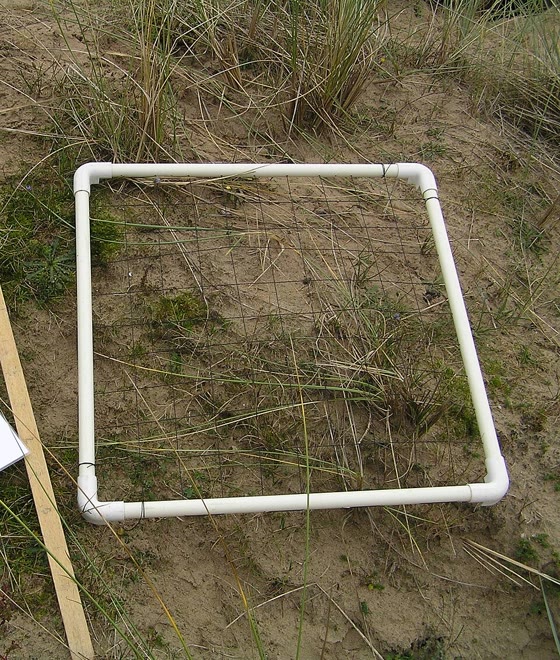
- A square frame of known area, for example 0.5 m × 0.5 m, used to sample a small area.
- Transect
- A line laid across a habitat, along which samples are taken.
- Random sampling
- Sampling points chosen from random coordinates on a grid, to avoid bias.
- Systematic sampling
- Sampling points at fixed intervals, for example every 2 m along a transect, to follow a gradient.
- Percentage cover
- The percentage of the area of a quadrat covered by one species.
5.14 Core practical 11: studying a habitat
| Your aim | Sampling | Statistical test |
|---|---|---|
| Compare two areas, e.g. a mown lawn and an uncut field | quadrats at random coordinates in each area | Student's t-test (two means) |
| Follow a change across a habitat, e.g. shade into sun | quadrats every 2 m along a transect | Spearman's rank (correlation) |
- Percentage cover: count the squares more than half covered; with 25 squares, each one is 4%.
- Abiotic factors: light meter (light), thermometer or probe (temperature), moisture meter or oven drying (soil water), pH meter (pH).
- The ACFOR scale (Abundant to Rare) is quick but subjective.

Check 5.14: spot the mistake (2 marks) 2 min
A student wrote this. Find each mistake and correct it. (2)
"To compare clover on a lawn and in a field, I will throw the quadrat over my shoulder, so the positions are random, and then use Spearman's rank."
Reveal the correction
- Random positions come from random-number coordinates on a grid, not from throwing (1)
- Two areas: compare the means with Student's t-test (1)
- DO NOT ACCEPT "Spearman's rank compares means"
5.14 key words
- Null hypothesis
- There is no significant difference (or no correlation). The test checks this.
- Significance level
- p = 0.05: a 5% probability that a result this large is due to chance.
- Critical value
- The value from the table that your calculated value must reach to be significant.
- Degrees of freedom
- Chi-squared: categories − 1. t-test: nA + nB − 2.
5.14 Statistics: choosing and using a test
| Test | Use it for | Example |
|---|---|---|
| Chi-squared (χ2) | counts in categories against expected numbers | offspring in a 3:1 ratio |
| Student's t-test | the difference between two means | leaf length on a path and in grass |
| Spearman's rank (rs) | a correlation between two measured variables | light and grass cover along a transect |
Check 5.14: spot the mistake (2 marks) 2 min
A student wrote this. Find each mistake and correct it. (2)
"χ2 = 2.1 is smaller than the critical value of 3.84, so there is a significant difference. This shows for certain that the ratio is wrong."
Reveal the correction
- Smaller than the critical value: accept the null hypothesis; the difference could be due to chance (1)
- A test never gives certainty: it gives a probability (1)
5.15 key words
- Succession
- The gradual, directional change in a community of organisms over time.
- Primary succession
- Succession on new or newly exposed land with no soil, such as lava or sand.
- Secondary succession
- Succession on land that already has soil, for example after a fire. It is faster.
- Pioneer species
- The first species to colonise bare ground, such as lichens and algae.
- Climax community
- The final, stable community at the end of succession.
5.15 Succession
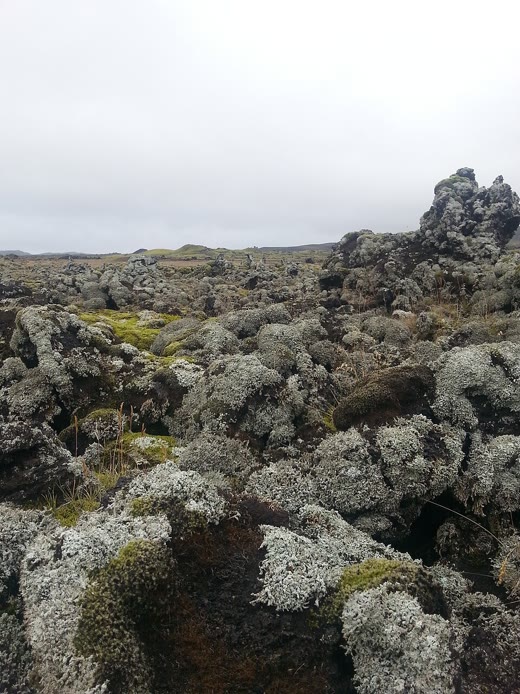

- Pioneers (lichens, algae) colonise bare rock: they photosynthesise and tolerate harsh conditions.
- Lichen acids weather the rock; dead pioneers decay and add organic matter, so a thin soil forms.
- Mosses, then grasses and ferns, can grow: the soil gets deeper and holds more water and mineral ions.
- Each new stage changes the conditions; larger species outcompete the earlier ones (interspecific competition).
- Shrubs, then trees: the climax community.
Check 5.15: spot the mistake (2 marks) 2 min
A student wrote this. Find each mistake and correct it. (2)
"Primary succession starts where a fire has burnt the plants. Pioneer species die out first, and then new species arrive to fill the space."
Reveal the correction
- Primary succession starts with no soil; after a fire the soil is left: that is secondary succession (1)
- The pioneers change the conditions first; new species can then grow and outcompete them (1)
- DO NOT ACCEPT "pioneers die out first" as correct
Common misconceptions and exam errors
- 5.9 "Herbivores eat the GPP." They can only use the NPP: the energy used in respiration has already gone as heat.
- 5.10 An efficiency above 100%: you divided the wrong way round.
- 5.11 Leaving out "at the same time" in the definitions of population and community.
- 5.12 Naming a factor without the biology: link it to enzymes, stomata, photosynthesis or respiration.
- 5.13 "Competition" on its own: say who competes, and for what.
- 5.14 Correlation is not cause: other factors also change along a transect.
- 5.15 Missing a link: each stage changes the environment, so new species can grow, and they outcompete the old ones.
Self-check: 5.9 to 5.15 (24 marks) 20 min
Answer without your notes, then hand in. The spec point is in brackets after each question. You need a calculator.
S1. A grassland has a GPP of 18 400 kJ m−2 yr−1. The grass uses 62% of this in respiration. Calculate the NPP of the grassland. Give the unit. (5.9) (2)
S2. In the same grassland, grasshoppers store 560 kJ m−2 yr−1 in new biomass and the spiders that eat them store 48 kJ m−2 yr−1. Calculate the efficiency of energy transfer from the grasshoppers to the spiders. (5.10) (1)
S3. Give two reasons why most of the energy in the grasshoppers does not reach the spiders. (5.10) (2)
S4. Explain the difference between a habitat and an ecosystem, using a coral reef as your example. (5.11) (2)
S5. Explain why few small plants grow on the floor of a dense tropical rainforest. (5.12) (2)
S6. A disease kills most of the rabbits in a grassland. Suggest the effect on the number of foxes and on the grass, and explain your answers. (5.12) (3)
S7. Two species of flatworm, A and B, live in the same streams. Where B is absent, A lives along the whole stream. Where B is present, A lives only in the cold water near the source. Explain this distribution. (5.13) (3)
S8. Describe how to estimate the percentage cover of a plant in a 0.5 m × 0.5 m quadrat divided into 25 squares. (5.14) (2)
S9. Name the statistical test you would use for each study: (a) comparing the mean mass of snails in two ponds; (b) finding out whether the number of daisies is correlated with light intensity along a transect. (5.14) (2)
S10. A chi-squared test on two categories gives χ2 = 5.2. The critical value for 1 degree of freedom at p = 0.05 is 3.84. Give a conclusion. (5.14) (2)
S11. Explain how pioneer species make it possible for other plants to colonise bare rock. (5.15) (3)
Mark scheme for the self-check
S1 (2)
- R = 18 400 × 0.62 = 11 408 (1)
- NPP = 18 400 − 11 408 = 6 992 kJ m−2 yr−1 (1)
- ACCEPT the correct answer with the unit and no working for 2 marks
- ALLOW one mark for the correct value with no unit or a wrong unit
S2 (1)
- 48 ÷ 560 × 100 = 8.6% (1)
- ACCEPT 2 or 3 significant figures
S3 (2): max 2
- Not all of each grasshopper is eaten (1)
- Some is not digested and lost in faeces (1)
- Energy used in respiration is lost as heat (1)
- Max 2
S4 (2)
- Habitat: the place where an organism lives, e.g. the reef for a clownfish (1)
- Ecosystem: all the reef organisms plus abiotic factors (water, light, temperature) (1)
- DO NOT ACCEPT "community" for the ecosystem unless the abiotic factors are included
S5 (2)
- The tall trees absorb most of the light (shade) (1)
- Too little light for photosynthesis, so little growth (1)
- IGNORE "competition" with no resource named
S6 (3)
- Fewer foxes: less food (prey) (1)
- The fall in foxes comes a little later (1)
- More grass: less grazing by rabbits (1)
- ACCEPT foxes may eat other prey, so they fall less
S7 (3)
- A and B compete for the same resources: interspecific competition (1)
- B is the better competitor in the warmer water downstream (1)
- So A is excluded there and survives only in the cold water near the source (1)
- DO NOT ACCEPT "intraspecific competition"
S8 (2)
- Count the squares more than half covered by the plant (1)
- Multiply by 4 (each square is 4%) (1)
S9 (2)
- (a) Student's t-test (1)
- (b) Spearman's rank correlation coefficient (1)
- ACCEPT "Spearman's rank" for (b)
S10 (2)
- 5.2 is greater than 3.84, so reject the null hypothesis (1)
- The difference between observed and expected is significant, not due to chance (1)
- ALLOW ecf from a wrong comparison for the second point
S11 (3)
- Lichens secrete acids that weather (break down) the rock (1)
- Dead pioneers decay, adding organic matter (1)
- A thin soil forms that holds water and mineral ions for new plants (1)
- IGNORE "photosynthesis makes the soil"